Mold removal and remediation in Colorado Springs
People are often surprised to find mold in a city this dry. It almost never comes from the air here. It comes from a leak, a slow drip, or a wet spot that was never fully dried. Fix the water, and the mold job becomes a contained, finite one.
Updated November 17, 2026
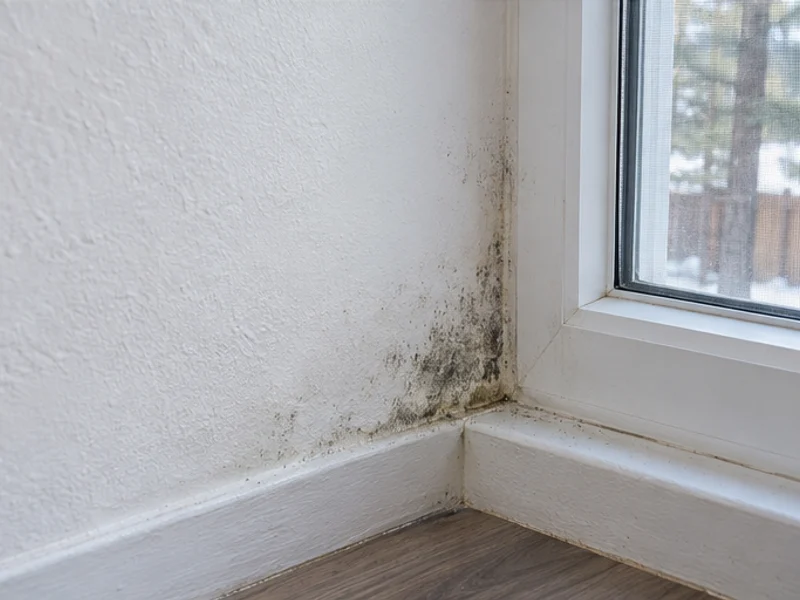
Where it shows up in local homes
- Under sinks and behind dishwashers, from slow drips nobody saw.
- Basement walls behind finished drywall and fiberglass batts, after a seepage event.
- Attics, where a bathroom fan vents into the attic instead of outside, or where ice dams leaked during a snowy winter.
- Around swamp coolers and their ceiling registers, when the cooler was not drained or the pad stayed wet.
- Crawl spaces with a bare dirt floor and no vapor barrier.
Small patch or professional job?
A common rule of thumb, used in federal guidance for homeowners, is about 10 square feet, roughly a 3 by 3 foot area. Below that, on a hard surface, many homeowners clean it themselves with detergent and water, wearing an N95 mask, gloves and goggles, and dry the area completely.
Call a remediation provider when the area is larger, when it is inside a wall or HVAC duct, when it came from sewage or dirty water, or when you can smell it but not see it. Painting over mold does not fix it, and bleach on drywall does not reach what grew into the paper.
What professional remediation involves
- Find the moisture source. Remediation without fixing the leak is temporary.
- Contain the area with plastic sheeting and negative air pressure so spores are not spread through the house during removal.
- Remove porous materials with growth: drywall, insulation, carpet pad.
- Clean the framing and hard surfaces with HEPA vacuums and wiping.
- Dry and verify. Many homeowners ask for a clearance check by someone other than the company that did the removal.
The industry reference for this work is IICRC S520. It is fair to ask a provider whether they follow it.
Testing first?
If you can see the growth, testing to identify the species rarely changes what needs to be done. Testing earns its cost when you smell mold and cannot find it, when you are buying a house, or when you want proof after remediation that the area is clean. See mold inspection and testing.
Questions people ask
How fast does mold grow after a leak?
On wet drywall or wood, growth can start within a day or two at room temperature. Our dry air slows it on surfaces you can see, but not inside a closed wall cavity, which is why hidden leaks are the usual cause.
Is mold removal covered by insurance?
When it results from a covered water event, like a pipe that burst, often yes, sometimes up to a sub-limit. Mold from a long-term leak or humidity is usually excluded. Check the mold section of your policy.
Can I stay in the house during remediation?
In most cases, yes. The work area is sealed off. People with health concerns may want to discuss it with the provider and their doctor.